


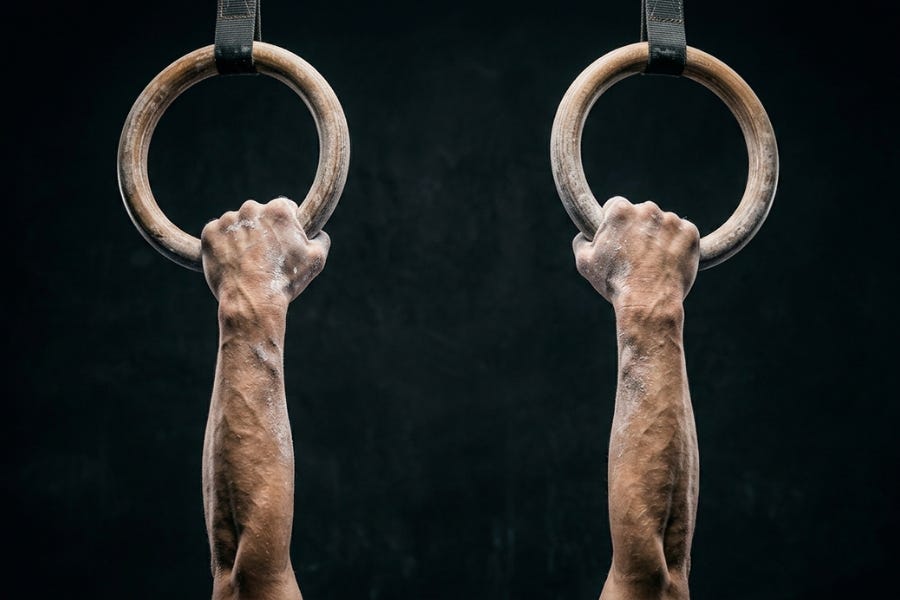
The grip gets tighter when the ground gets shakier.
I caught myself slipping into this pattern last year when everything felt like it was hitting at once.
Because the truth about growth is it’s not linear. Your comfort zone expands, you face harder things in different ways, and sometimes you still lose trust in yourself when overwhelmed with uncertainty.
Once I recognised it in myself, I started seeing it everywhere - in leaders navigating organisational changes, in teams trying to hold it together, in how we’re all responding to what’s happening in a world that often feels unfamiliar.
We hold on tighter.
Maybe you’re triple-checking work that’s already done. Staying late to make sure nothing slips through the cracks. Saying yes to everything because proving your value feels like the only way to stay safe.
Or maybe you’ve gone the other way - sticking to ‘how we’ve always done it’ because at least that feels predictable when nothing else does.
I get it. When everything around you feels unstable - mass redundancies, technology reshaping how we work, the future seeming impossible to predict - control stops feeling optional. It feels necessary.
But the tighter we grip, the more rigid we become. And rigid things snap.
So, the pattern that keeps surfacing is defaulting to control when what we actually need is to let go.
And look, this pattern probably served you once. Being thorough got you recognised. Controlling outcomes delivered results. It kept you safe - until it didn’t.
Here’s what it looks like now:
You’ve stopped asking for help because it’s faster to just do it yourself.
You’re working longer hours, not because there’s more work, but because you can’t let anything go.
You redo your own work multiple times, never quite satisfied it’s good enough.
You keep your head down, don’t speak up, because drawing attention feels risky.
You hold progress close until it’s perfect, then wonder why people don’t see your contribution.
None of this feels like control when you’re doing it. It feels responsible. Professional. What you need to do to survive.
Until you realise what it’s actually costing you.
You’re exhausted. Opportunities are passing you by because you’re too buried to see them. You’re so focused on not making mistakes that you’ve stopped growing. And the stability you’re working so hard to create? It’s not getting more solid. It’s just taking more from you.
I know this because I’ve lived it.
There was a time I believed if I just controlled every detail, worked hard enough, got everything right - I’d finally feel secure.
What I learned was that the tighter I held on, the less space there was for anything good to actually happen.
The shift came when I realised: control is fear dressed up as responsibility.
When roles are uncertain, working harder and trying to control everything around you won’t make you indispensable. Being adaptable will.
When everything is changing, rigidly sticking to the old way won’t protect you. Being willing to evolve will.
When you’re already overwhelmed, doing more doesn’t make you more effective. It just makes you more tired.
So, how do you interrupt the pattern?
Not by forcing yourself to stop - that’s just more control. But by noticing it first, then asking different questions.
And the paradox? To let go, you first need to understand what you’re holding.
When I notice the pattern kicking in, I remind myself to HOLD. Yes, the irony is intentional - because sometimes you need to get clear on what you’re gripping on to before you can let it go.
H - Honour the fear
When you feel yourself tightening your grip, pause and ask:
What am I actually afraid will happen if I don’t control this?
Is this fear real, or is it my need for certainty talking?
O - Observe the cost
Before you act on the impulse:
What is holding on this tight costing me - in energy, relationships or opportunities?
What am I preventing by trying to control this?
L - Loosen the grip
Instead of tightening further:
What would letting go look like here, even if it was just a little?
Where could I ask for help, or trust someone else?
What if I tried something different, even if the result isn’t guaranteed?
D - Discover what shifts
After you’ve made a choice:
Did controlling this actually help, or just create more stress?
What did I learn about myself?
You can’t control your way through uncertainty. None of us can.
What I’ve learned - and what keeps proving itself true - is that the moments I navigate best aren’t the ones where I’m trying to control everything. They’re the ones where I’ve figured out what actually matters enough to hold on to, and what I can trust to work itself out.
That takes practice. It takes awareness. And yes, it takes courage to loosen your grip when everything feels unstable.
But what I know is that you already have what you need to get through this. Not by controlling every outcome, but by trusting yourself enough to navigate it as it unfolds.
The work isn’t about fixing yourself. It’s about recognising the pattern, understanding why it’s there, and choosing something different when it shows up.
That’s how things actually shift.
So, let me ask you this - where are you holding on too tight?
What would it feel like to loosen the grip, just a little, and see how it plays out?
Start there. Notice when it happens. Use HOLD to help you see it. And be gentle with yourself as you learn.
Change doesn’t need you to get it right. It just needs you to be willing to look.